
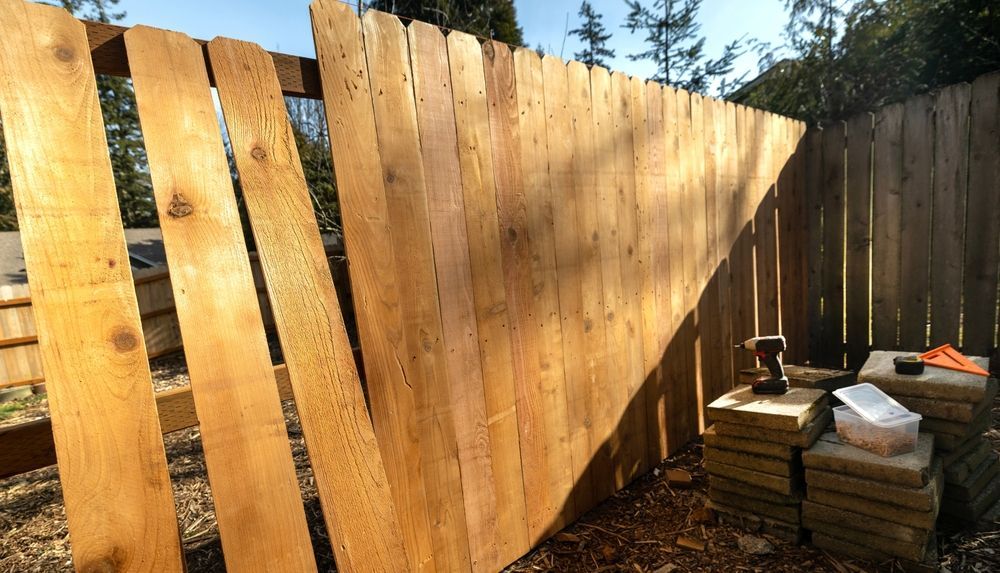
Fences Built to Stay Upright
Fence Reinforcement for Wind Damage in Cheyenne for properties facing open terrain, repeated storm failures, and high-exposure fence lines
Wind pressure in open terrain pushes directly against fence panels with no natural windbreaks to reduce the force, and fences that weren't originally reinforced often lean, crack, or pull loose from posts during sustained gusts. Reinforcement adds structural support elements that distribute wind load more effectively and prevent the same failure points from breaking again. Rhodes Fencing & Staining strengthens posts, rails, and panel connections on Cheyenne properties where recurring wind damage shows the original fence wasn't built to handle the exposure level it faces.
Reinforcement involves adding horizontal bracing between posts, upgrading fasteners to resist pull-out, installing metal brackets where rails meet posts, and in some cases re-setting posts deeper or with concrete anchoring. The work focuses on connection points and load paths—the places where wind force transfers through the structure and where failure typically starts. Each reinforcement method depends on how the fence is failing and what wind direction creates the most stress.
Schedule a site evaluation to determine which sections face the highest wind exposure and what reinforcement methods will prevent future damage.
Why Reinforcement Works for Exposed Properties
Fence reinforcement changes how the structure handles wind pressure by making sure no single post or connection point bears the entire load. Horizontal rails are upgraded or additional mid-rails are added to reduce the unsupported span of panels, metal brackets replace nailed connections that pull apart under lateral force, and posts in corners or along long straight runs receive extra anchoring or larger-diameter replacements. Cheyenne's wind comes across open rangeland with no obstacles to slow it down, so fences in those areas need engineering adjustments beyond standard residential construction.
After reinforcement, the fence stays vertical through wind events that previously caused leaning or panel separation. You'll notice the fence doesn't flex as much during gusts, panels remain secured to rails without rattling, and posts hold their original position instead of tilting incrementally with each storm. The structure becomes predictably stable rather than requiring repairs after every significant wind event.
Reinforcement also reduces long-term maintenance costs by eliminating the cycle of repeated damage and repair. The upfront work costs more than basic repairs, but it stops the need for emergency fixes and extends the fence's functional life in high-wind conditions where standard construction fails regularly.
Reinforcement questions often focus on what specific upgrades prevent wind damage, whether existing fences can be strengthened without full replacement, and how to identify properties that need reinforcement.
Answers to Frequent Service Questions
What wind speeds cause fence damage in Cheyenne?
Sustained winds above 40 miles per hour start stressing standard residential fences, and gusts over 60 miles per hour can cause immediate failures in weak connection points or improperly anchored posts. Properties on elevated terrain or facing prevailing westerly winds with no shelter experience the highest loads.
How does reinforcement differ from standard repairs?
Repairs restore the fence to its original condition, while reinforcement upgrades the structure beyond standard construction to handle higher loads. Reinforcement includes adding components that weren't part of the original build, such as metal brackets, deeper post anchoring, or additional bracing rails.
Can an existing fence be reinforced without rebuilding it?
Yes, as long as the posts and primary rails are still structurally sound. Reinforcement adds support elements to the existing framework, so you're not tearing out and replacing the entire fence—just upgrading its capacity to resist wind force.
What parts of a fence fail first in high wind?
Connections between rails and posts are the weakest points, followed by posts that aren't set deep enough or aren't anchored in stable soil. Panels themselves can crack if they span too far between support rails without intermediate bracing.
How do I know if my property needs reinforcement?
If your fence has been damaged by wind more than once in the same locations, or if sections lean noticeably after storms, reinforcement is likely needed. Properties with long uninterrupted fence lines, corner sections that face open terrain, or fences on hilltops or ridges are prime candidates for preventative reinforcement.
Rhodes Fencing & Staining assesses your property's wind exposure, fence condition, and failure history to design reinforcement that addresses the specific stress points on your Cheyenne fence. Arrange an on-site consultation to review what upgrades will keep your fence standing through future wind events.