Property Lines That Define Your Space
New Fence Installation in Cheyenne for homes requiring perimeter security, privacy, or boundary definition
Properties without existing fencing face challenges with pet containment, privacy from neighboring lots, and clear boundary identification that prevents encroachment disputes. New fence installation from Rhodes Fencing & Staining establishes those boundaries with materials and layouts planned around your property's topography, setback requirements, and intended use. The finished fence creates a visible, functional perimeter that addresses security and aesthetic goals without guesswork about property lines.
Installation planning includes layout confirmation using survey markers or plat maps, post placement that accounts for slopes or irregular terrain, and material selection based on your functional priorities and maintenance preferences. Post depth and concrete anchoring are engineered to resist frost heave and wind loads typical of Wyoming's climate.
Arrange an on-site consultation to review your property layout and discuss material options that align with your timeline and budget.
How Proper Layout Prevents Future Problems
Ground-up installation begins with verifying property boundaries to avoid setback violations or neighbor disputes, followed by marking post locations at intervals that maintain structural integrity without unnecessary material waste. Posts are dug to depths below the frost line and set with concrete that cures to full strength before rails and panels are attached, ensuring the structure doesn't shift during the first freeze-thaw cycle.
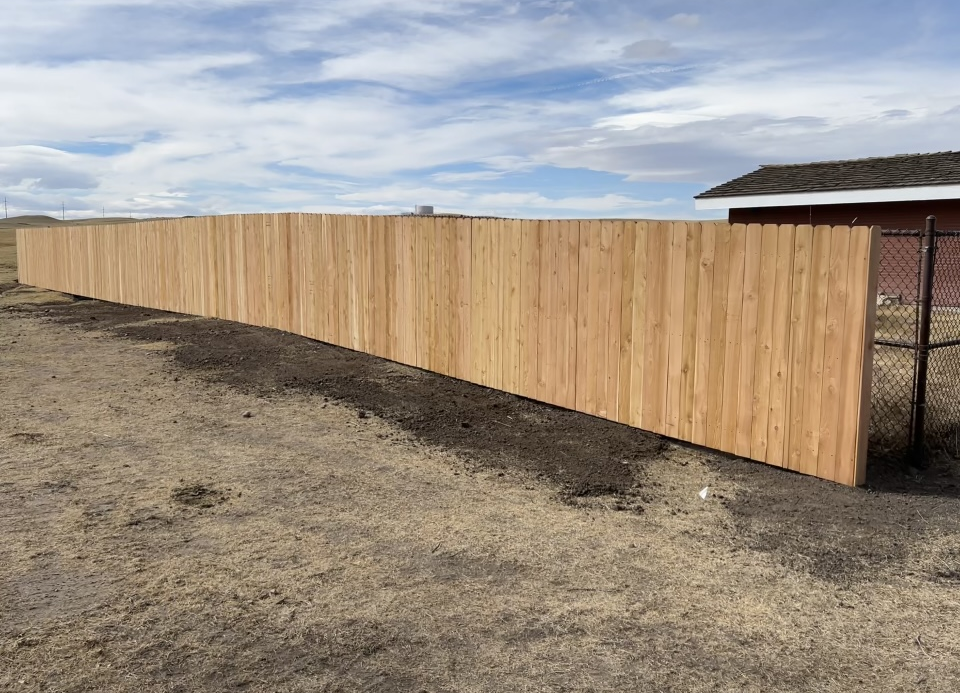
After installation, you'll have a fence that runs true to your property lines, stands plumb without leaning, and functions as intended whether the goal is privacy screening, pet containment, or decorative boundary marking. Gates open and close smoothly, panels align without gaps, and the entire system resists wind pressure without visible flex or rattling.
The service includes coordination with local building codes, HOA requirements if applicable, and utility line locations to prevent conflicts during excavation. Material options are presented with clear trade-offs between upfront cost, maintenance requirements, and expected lifespan under local weather exposure.
First-time fence installations raise questions about permitting, material durability, and how the work affects existing landscaping.
Common Questions About Installing a New Fence
How do you determine where the fence can legally be placed?
Installation follows setback requirements outlined in Cheyenne's zoning code, typically five to ten feet from the property line depending on your lot classification, and we confirm placement against your survey or plat map before digging.
What's included in the installation process?
The scope covers layout planning, post setting with concrete footings, rail and panel attachment, gate installation if specified, and site cleanup including backfill and leveling of disturbed soil.
Which material requires the least maintenance over time?
Vinyl fencing eliminates the need for staining or sealing and resists moisture damage, while wood fencing requires periodic treatment to prevent weathering and chain link needs occasional tension adjustments.
How soon after installation can the fence handle full use?
Posts and concrete footings need 24 to 48 hours to cure before the fence is subjected to heavy lateral pressure, such as large dogs running into panels or gates being repeatedly slammed.
Why does post spacing matter for long-term performance?
Posts spaced too far apart allow panels to bow or sag under wind load, while closer spacing increases material cost without adding meaningful strength. Standard spacing balances both concerns based on material type and local wind conditions.
Rhodes Fencing & Staining provides material samples and layout drawings during the planning phase so you can visualize the finished installation before work begins. Contact us to schedule a site visit and receive a detailed estimate based on your property's dimensions and soil conditions.