Fences That Work When You Need Them
Fence Repairs in Cheyenne for damaged panels, leaning sections, and post failures after wind events
Rhodes Fencing & Staining handles fence repairs across Cheyenne when sections start leaning, panels come loose, or structural components fail after storms. You're looking at a fence that no longer stands straight or holds its original shape, and targeted repairs restore both strength and appearance without replacing the entire system. The work focuses on fixing what's compromised while keeping the rest of your fence intact.
Repairs address the specific points of failure—loose connections between rails and posts, panels that have shifted out of alignment, or sections that lost stability due to soil movement or wind pressure. Matching existing materials keeps the fence visually consistent, and structural fixes stop further deterioration in adjacent sections. Cheyenne's wind conditions mean fences face recurring stress, so repairs often include reinforcing connections that will take the same forces again.
Schedule a property evaluation to identify which sections require immediate attention and which remain stable.
What Proper Repairs Accomplish Long-Term
Fence repair work starts with identifying why a section failed—whether from wind load, rotted wood at ground level, or fasteners that pulled loose over time. Each repair method depends on what caused the damage: leaning posts get re-set with proper depth and backfill, loose panels are re-secured with corrosion-resistant fasteners, and compromised rails are replaced to restore the load path that keeps the fence upright.
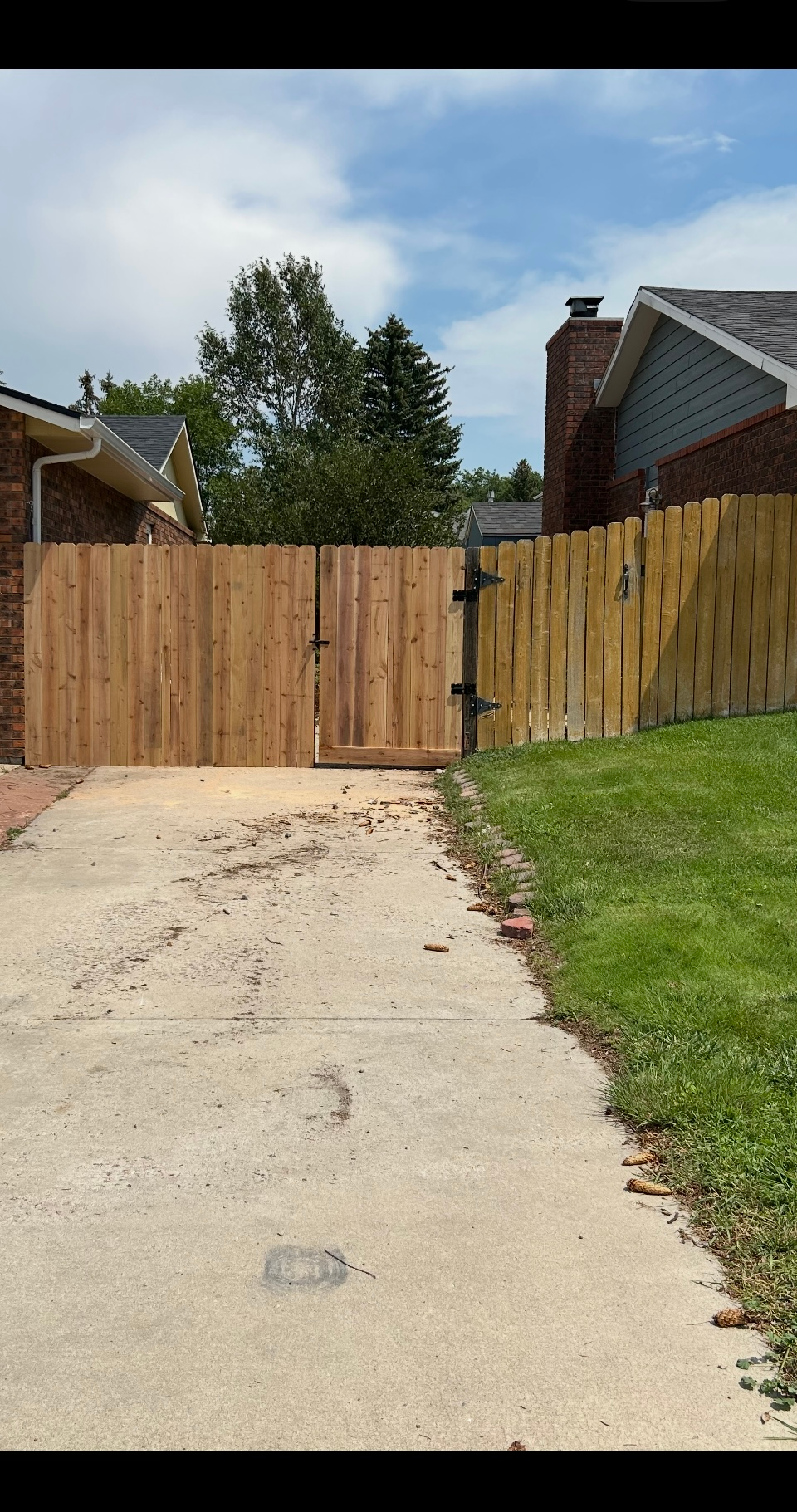
After repairs, you'll see sections return to vertical alignment, panels that no longer rattle in wind, and gates that latch correctly again. Rhodes Fencing & Staining matches wood grain, fence style, and finish so repaired areas blend with the original structure. The fence holds livestock or pets as it did originally, and gaps that allowed access are closed.
Repairs also prevent cascading failures—fixing one leaning post stops adjacent sections from taking extra load and failing next. The approach extends the functional life of your fence by years, delaying the cost of full replacement until the majority of the system requires it.
Fencing in Cheyenne takes sustained wind exposure, and many repair questions focus on what can be fixed versus what needs replacing and how to prevent repeat damage.
Questions Before Starting Your Repair
What causes fence sections to lean after storms?
Wind pressure transfers through panels to posts, and if posts aren't set deep enough or if soil has eroded around the base, the entire section tilts. Repairs involve re-setting posts at proper depth with compacted backfill or concrete anchoring depending on soil type and exposure level.
How do you match existing fence materials during repairs?
Wood species, panel style, and board dimensions are matched to what's already installed, and stain or paint is blended to the current finish. If exact materials aren't available, the closest match in grain and color is selected to minimize visual contrast.
When should I repair a fence instead of replacing it?
Repairs make sense when less than a third of the fence shows damage and the remaining structure is sound. If posts throughout the fence are rotting at ground level or if panels are failing in multiple areas, replacement becomes more cost-effective than sequential repairs.
What gets reinforced during wind damage repairs?
Connections between rails and posts are upgraded with longer fasteners or metal brackets, and in high-exposure areas, additional horizontal bracing or deeper post-setting adds resistance. The goal is to distribute wind load across more connection points so no single component takes all the stress.
How quickly can storm damage be addressed?
Response time depends on the extent of damage and weather conditions, but most single-section repairs in Cheyenne are completed within days of assessment. Temporary bracing can secure a fence until full repairs are scheduled if immediate stability is needed.
Rhodes Fencing & Staining evaluates each damaged section to determine whether targeted repairs restore full function or if replacement is the better long-term option. Arrange an on-site assessment to review your fence's current condition and repair requirements.